Categories
Blogs Personal Finance

What To Look For In a Financial Advisor

Keeping track of finances is the most crucial aspect of building wealth for the future. 

You can surely do it on your own until your financial instruments grow in every possible direction. Your family expands, your needs and wants increase, and your liabilities take a different turn. 

And when that happens, you are going to need a trustworthy and knowledgeable financial advisor. 

Financial Advisors can understand YOUR financial goals to give you the right advice. 

You need a financial advisor for-

  1. Creating a sustainable investment portfolio
  2. Monitoring your investments and taxes
  3. Tracking your expenses
  4. Creating savings for Children’s Education/Wedding 
  5. Emergency corpus building
  6. Retirement Plan
  7. Other liabilities

But the question is: How to select the right financial advisor? Whom can you trust with your wealth?

Not to worry. We have got you covered. Here’s what to look for in a financial advisor.

6 Things to Look for in a Financial Advisor

1. Look for Knowledge

Managing finance isn’t an easy thing. Even financial advisors learn from their mistakes as the market can be unpredictable.

When you look for a financial advisor, always check their knowledge and professional background. You can ask them for references and talk to their clients for more information.

Advisors who have handled finances through various cycles of the economy will bring more knowledge and experience to the table. Apart from the equity market cycles (which everyone seems to be savvy of, considering the information overload), an additional factor to consider is the number of interest rate cycles the advisor has worked through. Bonds and various debt instruments form an important fragment of asset allocation so it’s important to know whether your advisor is well-versed with the impact of interest rates on investments.

The market is full of financial advisors who can claim unrealistic outcomes, but you should evaluate realistic scenarios.

This brings us to the next point.

2. Realistic Expectations

No advisor can promise you how much returns you will get in a year. 

If an advisor is claiming 25-30% returns in a year, that’s a big NO right there. 

In fact, the word ‘Guaranteed Returns’ is not listed in an advisor’s dictionary.

Instead, experienced financial advisors will give you realistic estimates. They can plan your investment based on your risk profile, short and long-term goals, taxation, and insurance.

3. Proper Licenses

Financial advisors must have a license for the financial instruments they are selling. Certified Financial Planners (CFPs) or Chartered Accountants (CA) can guide you with finances and taxes.

If you want to invest in mutual funds, Advisors having a certificate from the Association of Mutual Funds in India are best suited. For insurance products, you may seek advisors who have a license from the Insurance Regulatory and Development Authority of India.

Always prefer working with certified financial experts. 

4. Financial Advisors Should Focus on Your Goals

You might have come across advisors who are more interested in selling financial instruments than to help you. That’s a red flag. 

Your financial advisor should focus on your financial goals, your investments, and your risk profile. The reason you are hiring a financial advisor is to simplify budgeting, taxation, insurance, long-term investments, and more.

If their focus is more on commission than on your needs, you shouldn’t proceed. Work with an advisor who is willing to listen to you before giving any sort of advice.

Tip See if the financial advisors have worked with clients who have similar interests/goals as you. Seek old track records of the advisor’s clients and their progress before making a decision.

5. Financial Advisors Must be Passionate About Wealth Management

Is your financial advisor talking passionately about current market scenarios and industry trends? If yes, you’ve got a good one there. 

Passionate financial advisors tend to constantly be in a learning and researching phase. They love to know what’s happening in the market. They gravitate towards finding out about new financial products, changes in law, new methodologies, and more.

Their passion becomes their primary gateway towards gaining relevant experience. If you want to know if the financial advisor is aware of new trends, ask them- “What’s new in the industry?” and see how they answer.

6. Communication Skills

It’s normal to be skeptical about letting someone else handle your finances. Trusting someone won’t come easily.

That’s why the communication skills of an advisor matter a lot. 

Your advisor should be able to explain finances in simple language. You should be aware of what’s going on with your investments. The advisor must be able to answer your queries and communicate all necessary details with you.

Often, you might come across advisors who talk a lot but offer no useful insights. 

An advisor should be able to share his/her experience, client success stories, suitable investment possibilities for you, and real-time market insights. And as an investor, you must seek this information as often as you can.

Keep communicating with the advisor to be on the same page. 

Conclusion

Everyone loves adulthood until the finances knock on your door with possibly ten arms. Then childhood seems much easier. You had nothing to worry about apart from your piggy bank. 

Remember though, your finances don’t need to be complicated. You can easily get everything sorted with the help of a financial advisor. 

Most of the time, people are not on-board with the idea of letting someone else manage their finances. But think of it as a collaboration. When you let an expert handle your money, you have a chance to earn more. Your money can bring more money with suitable investments.

But don’t forget to do your research as well.

You can analyze your portfolio for free at VNN Wealth to have a thorough glance at your investment. Once you have a clear idea of what you want to achieve in the next few years, our financial experts can guide you. You can explore all types of investment opportunities that can build wealth in the long run.


Have more queries regarding investments and finances? Contact us anytime.

Categories
Blogs Investing Basics

Power Of Compounding Interest: Benefits of Investing Early

You must have heard the concepts of the Power of Compounding Interest in your mathematics textbook. Something that seemed boring in childhood can turn out to be pretty amazing in your adulthood. Yes! Compounding can build your wealth exponentially. And it’s even better if you start investing early.

In your 20s, the term ‘Savings’ may not be your first priority. Understandable! You would want to enjoy your own money. But, that’s exactly the right time to start building wealth for the future. The earlier you start, the better outcome you’ll see. And you will be amazed to know what compounding can do with your money.

Interested enough? Let’s find out more about it.

Let’s not get into the whole boring definition that you probably hated in school.

In simple words- The power of compounding is earning interest on both the principal amount plus the previously earned returns. 

The interest that you earn on the principal amount gets reinvested every year. It allows you to earn interest on both the principal amount and the reinvested interest.

Whereas, if you opt for simple interest, you will only earn interest on the principal amount. 

Let’s say you’ve invested INR. 10,00,000 in a scheme with a 12% annual interest rate. You will receive 12% profit on your principal amount every year.

Here’s the comparison of simple interest vs compound interest.

YearsSimple Interest EarnedTotal valueCompound Interest EarnedTotal Value
56,00,00016,00,0008,21,93918,21,939
1012,00,00022,00,00023,19,46233,19,462
1518,00,00028,00,00050,47,85860,47,858
2024,00,00034,00,0001,00,18,8291,10,18,829
2530,00,00040,00,0001,90,75,6362,00,75,636

See the difference in returns between simple and compound interest. 

In 25 years, your 10 lakhs @12% p.a. will become 40 lakhs with simple interest and 2 crores with compound interest. That’s the power of compounding.

Note- Instead of a lumpsum investment, you can also consider starting a SIP of a mutual fund scheme to benefit from the rupee cost averaging and power of compounding.

Now let’s say, Abhishek, Ananya, and Simran are three friends who started a SIP of INR 10000 with 12% compounding interest till age 60. But, Abhishek started at age 25, Ananya at 30, and Simran at 35. 

By the time Abhishek, Ananya, Simran are 60. Abhishek built more wealth than Ananya and Simran.

Now, as you can see in the above table, Abhishek invested an additional 12 Lakhs compared to Simran, who began investing early. By the time both reached the age of 60, Abhishek accumulated a total corpus of 5.09 Crores, which is MASSIVE 3.59 crores more than Simran.

Tip- You can build a large corpus from early investments and convert your lakhs into crores.

Often, newly employed people have the urge to spend money on things they always wanted to own. Investment isn’t on their mind.

However, you will probably have less responsibility and more time to start saving and investing. It’s the right time to build wealth for the future.

Market volatility and global economic changes are uncertain. It’s always better to have your financial goals aligned. Besides, when you are young, you can explore various investment instruments, take more risks, and build a diverse portfolio.

From the above table, you already know the benefit of investing early. That’s the best way to ensure a comfortable life for you and your loved ones.

How to Start Saving Early?

Now that you know how early savings can grow your wealth exponentially, here are some tips that you can try.

1. Plan Your Expenses

It’s natural to have a spending habit in your 20s. After all, you are enjoying your youth. But, these are the years that can make your 30s, 40s, and retirement comfortable.

To have a balance between expenses and savings, note down your budget. It will help you identify certain expenses that can be cut down. As your mom would say- No need to order food online when we have plenty at home.

Also, you will come across some heavy expenses such as weddings, healthcare, child education, house, or car purchase anytime in the future. 

These expenses can be done smoothly with thorough expense planning. Have a clear idea of what you want to financially achieve in the next 10 years. Cut down unnecessary expenses and invest them into mutual funds via SIP. 

Read about the benefits of investing via SIP. 

2. Maintain Discipline 

Discipline plays a very crucial role in investments. You have to be consistent to get desired outcomes. Plan your investments and execute them on time. 

Nowadays, net banking offers an auto-debit feature to ensure you don’t forget an installment. Or simply use app reminders to have a consistent investment plan. 

3. Keep Track of Your Savings

When you have a complex investment portfolio, it could get tricky to keep a track of everything. You can either note down all your finances in a secure folder or seek help from a financial expert who can do it for you.

With VNN Wealth, you can get your portfolio analyzed periodically and take an expert’s advice to manage your finances. 

4. Plan Retirement Horizon

With the right investments, you can plan an early retirement and still have a comfortable life.

The earlier you start saving, the earlier you will have an envisioned wealth. Determining your investment horizon will help you figure out the necessary financial goals. Be it your retirement home or a long-due vacation, you will be able to do it all comfortably. 

5. Be Patient

Patience is the key while building wealth. Most investors seek quick returns, which is not always possible. Remember, the power of compounding works better if you hold your investment for a longer time.

Conclusion

The main highlight of compounding is- your money makes more money. You earn interest on interest. And you use time as a variable to convert your lakhs into crores.

The earlier you invest, the larger the corpus you will build over the years. We would recommend starting a mutual fund SIP to benefit from compounding. It’s never too late to start building wealth. 

The power of compounding works in the background as you continue to invest money. All you need is patience and of course, the right investment instruments. 

Start planning your expenses and set financial goals for the future. If you need help crafting a sustainable investment portfolio, we are here for you.


Give VNN Wealth experts a call or send an email to discuss all the possible ways you can build wealth. Start early and save big!

Categories
Blogs Mutual Funds

15 Common Types Of Debt Funds In India

Debt funds are mutual funds schemes that allocate your assets to debt instruments such as government bonds, corporate bonds, commercial papers, and T-bills.

These debt instruments are traded in the market like stocks. Their price goes up and down based on the interest rates and demand. 

In recent years, debt funds are gaining popularity among investors as they offer decent returns with lower risk than equity schemes. 

Debt funds come in various types depending on the investment horizon and risk factor. 

Let’s see how many different types of debt funds are there

Common Types of Debt Funds

Debt funds have three primary categories based on credit profile, duration, and underlying assets.

Type 1: Duration Profile

These debt funds primarily focus on the maturity duration of the underlying investment. 

  1. Overnight Funds

Overnight funds invest in debt instruments with a maturity of 1 day. This bond offers high liquidity with moderate returns. Overnight funds are suitable for investors willing to invest in debt schemes for a very short period of time.

  1. Liquid Funds

Liquid fund schemes invest in debt securities with only up to 91 days of maturity period. These funds are suitable for investors seeking steady returns by investing only for a few months. 

  1. Ultra-Short Duration Funds

Ultra-Short duration funds have a 3-month maturity period. These funds may offer superior yield (rate of return) with low risk when held for more than 3 months. 

  1. Low Duration Debt Funds

Low Duration debt funds expect investors to have an investment horizon of at least 6-12 months. These funds may deliver higher returns than ultra-short duration funds but with moderate risk. To boost the yield, these funds may allocate some assets to bonds with lower credit rank.

  1. Money Market Funds

Money market funds allocate your assets to debt instruments having a maturity period of upto 1 year like commercial papers or treasury bills. The interest income may boost returns on these funds.

  1. Short Duration Funds

Short-duration funds expect you to have 1-3 years of an investment horizon. These schemes invest in both short and long-term debt instruments with different credit ratings. You may receive higher returns than liquid or ultra-short funds but with some fluctuations in the prices. Investors with a slight risk appetite can consider these funds.

  1. Medium Duration

These funds invest in debt and money market instruments with a maturity period of 3-4 years.

  1. Medium to Long Duration

These funds have a maturity horizon of 4-7 years. You may come across high-interest rate risk but with decent returns.

  1. Long Duration

These funds have a 7+ years maturity period. Long-duration schemes might be riskier than any of the above schemes, yet less risky than equity schemes. 

    10. Dynamic Funds

Dynamic funds have no threshold or restrictions on the security type or maturity period of the investment. These schemes are flexible and dynamically change investments depending on the interest rate cycle. 

Type 2: Underlying Assets

These debt funds focus mainly on the specific investment profile of the underlying asset.

  1. Corporate Bond Funds

These schemes invest at least 80% of total assets in AA+ or higher corporate bonds. Investors with a low-risk appetite seeking regular income and safety can consider investing in corporate bond funds.

  1. Floater Funds

Floater funds invest at least 65% of total assets in floating rate instruments. As the coupons (annual fixed income security) on the floating rate get periodically reset, you can take advantage of low interest-rate risk. 

  1. Banking and PSU Funds

These funds invest at least 80% of total assets into debt securities issued by banks, PSUs, and public financial institutions. These funds offer safety, decent yield, and liquidity. 

Type 3: Credit Profile

These debt funds invest based on the underlying credit risk profile. 

  1. Credit Risk Funds

Credit risk funds allocate at least 65% of total assets to AA (or lower) rated corporate bonds. There’s some risk but yields might be superior. If you have an aggressive risk profile and are looking for high risk-high return, these funds are suitable for your portfolio.

  1. Gilt Funds

Gilt funds invest at least 80% of total funds in government securities of varying maturity periods. You may come across a high-interest rate risk but a low default risk. In a falling interest rate scenario, Gilt funds may be an ideal investment option.

On the other hand, Gilt funds with a 10-year constant duration, unlike regular Gilt funds, invest at least 80% of total funds in government securities with a constant duration of 10 years. Here, interest rate risk is stable due to the constant duration. 

Conclusion

Among all the different types of debt funds, it could be confusing to choose one. It’s important to match the current yield to maturity, modified duration, and credit risk of the debt fund to your financial goals, risk profile, and investment horizon.

It’s best to get an expert to help you find which debt fund to invest in. Before letting a financial advisor evaluate your profile, here are some things you need to know.


Contact us to get a free portfolio analysis and know about all possible investment options suitable for you.

Categories
Blogs Mutual Funds

Index Mutual Funds: Top 5 Advantages of Investing

Index mutual funds are the type of passive funds that follow a certain index/benchmark to plan investments. The fund managers follow the index such as Nifty 50 or Sensex to invest money in the exact proportion. The returns on these funds are aligned with the underlying index. 

These funds are safer than equity mutual funds, have lower expense ratios, deliver decent returns, and don’t need active attention. Investors who are seeking diverse portfolios with low to moderate risk can take advantage of the index funds.  

Let’s shed more light on the index funds.  

Index mutual funds in India either follow the Nifty 50 or Sensex as the investment benchmark. 

Nifty 50 is the benchmark index that represents the top 50 companies listed on the National Stock Exchange. Sensex represents the top 30 companies listed on the Bombay Stock Exchange. These companies could be of any type and sector.  

Fund houses allocate money to these top companies on Nifty or Sensex. The performance of the index funds completely depends on the performance of the underlying index. 

It is always advised to hold these funds for a longer horizon to receive superior returns.

1. Diverse Portfolio

Index funds are a combination of companies from various sectors. Once you invest in index funds, you invest in all these companies without assessing them individually. 

Not only does it save your time but also diversifies your investment portfolio. 

2. No Active Management 

Index funds are passive investments. Neither the fund manager nor you have to actively reallocate the funds to balance risk and returns. 

Fund managers simply follow the underlying index benchmark and keep the investment as it is.  No headache of active management.

3. Low Expense Ratio 

Fund houses do not need to invest time and resources into analyzing the performance of the fund. They only have to reflect the benchmark into the investment allocation. To do so, they charge a very minimal expense ratio. 

4. No Fund Allocation Bias 

How much funds to allocate to a particular stock is always a question with mutual funds. Fund managers have to analyze the market to decide the percentage of funds to allocate to each company. 

In index funds, the allocation bias doesn’t exist as the benchmark defines it all. There is less chance of human error as these funds are regulated with the index.

5. Risk Transparency 

The fluctuations in the returns from index funds depend on the performance of the top companies from the underlying index.  

Since Nifty and Sensex constantly track the performance of the companies, the risk can be lower. You have complete transparency about the risk factor.

1. Returns on Index Funds 

As index funds are passively managed funds, they are less affected by market volatility. You will be able to earn decent returns even when the market is not at its peak.  However, you may want to consider investing in some active funds to balance the returns. 

2. Risk

Index funds are less riskier than equity funds. Market volatility doesn’t actively impact index funds. You may still get good returns compared to other actively managed investments.

3. Tracking Error and Tracking Difference 

Tracking difference is the difference between the gains of the index funds vs the underlying index. If it’s positive, the funds have outperformed the underlying index. Tracking error is the standard deviation of the tracking difference over a period of time. Fund houses make decisions based on tracking errors with respect to the underlying index. It can have either a positive or a negative impact on the returns.

4. Investment Horizon 

Index funds deliver better returns in a long term. If you keep your investment horizon to 5-7 years, you are most likely to earn better returns. The rule applies to all mutual funds. 

5. Index Category 

You may want to make yourself familiar with the index category. Index funds either follow the Nifty 50 or Sensex with variable or equal weightage. You can choose the index fund category based on your risk tolerance and portfolio balance. 

The capital gains earned via Index funds are similar to the equity mutual funds. It depends on the duration of the investment. 

If you redeem your investment before 12 months (Short term capital gains), you will have to pay a 20% tax. Investments held for more than a year (Long Term Capital Gains) above 1.25 Lakhs are taxed at 12.5%.

Index funds are not as risky as equity funds or stocks. So any new investor can start an investment portfolio with index funds. These funds are suitable for low-risk appetite investors. 

However, index funds are also great to balance the risk. So if you have active funds which are prone to risk, index funds can balance your risk profile.  

Always good to have a blend of active and passive funds in your portfolio.

The top two advantages of index funds are: these funds are passively managed and possess comparatively lower risk. If you are looking for a long-term, risk-balancing investment, index funds can chime in on your portfolio.

You may want to get familiar with the index categories before choosing a suitable index fund. Or you can always seek help from our expert advisors. 

We recommend evaluating your portfolio before deciding on the right index fund for you. Write to us anytime with your investment goals. Get a complimentary portfolio analysis and start building wealth.

You may also like to read-

What are Exchange Traded Funds and how are they different from Index Funds?

Categories
Blogs Mutual Funds

FD Vs Debt Funds: Where to Invest?

FD vs Debt Funds: Where to invest your money?

The fixed deposit has been a popular investment option in Indian households for years. If you have a lumpsum amount, your grandparents and parents will suggest investing in FD.

Debt funds, on the other hand, started becoming popular in the past few years. Many investors began preferring debt funds over FD for several reasons. 

However, the changes in the debt funds taxation from April 2023 had thrown everyone off guard. Investors will no longer benefit from indexation on Long-Term capital gains. Both Long and Short-term capital gains will be taxed as per the investor’s tax slab.

So…

Are debt funds still better than FD? The answer is YES! Especially after the new tax regime as per Budget 2025.

Let’s find out how.

A fixed deposit is a financial instrument where you can invest a lumpsum amount and earn returns at fixed interest rates. Usually, banks have predefined interest rates and tenure.

Debt funds are a type of mutual fund in which fund houses allocate your assets into fixed-income securities such as government bonds, corporate bonds, commercial papers, and T-bills. 

Fixed Deposit:

FD is known to be the safest investment option. However, in rare cases, if a bank goes bankrupt, it might default on your FD. According to recent RBI rules, even nationalized banks only offer up to INR. 5 lakh of FD default insurance per account. You may not receive the principal amount or interest above INR. 5 Lakh if the bank defaults on your FD.

Debt Funds:

The risk on debt funds depends on the features of the scheme you invest in. There are 15 different types of debt funds, each with variable risk-reward intensity. 

Debt funds primarily come across two types of risks:

1. Interest Rate Risk- Similar to stocks, bonds are also traded in the market. Their price goes up and down based on the interest rate and demand. If the interest rate goes up, the price will decrease and vice versa. These fluctuations can either drop or boost the returns. You can manage the interest rate risk by holding your investment until maturity or by buying short or long-duration funds based on whether the interest rates are going up or down. 

2. Credit Risk- Say, for instance, you loan INR. 1000 to your friend to start a business. The friend promises to return your money with interest. But if his/her business doesn’t do well, then your friend might not be able to honor the commitment. A similar thing can happen in debt funds. Borrowers might not be able to deliver expected commitments, which causes credit risk. You can avoid it by evaluating the ratings of bonds through credit rating agencies like CRISIL. Different credit rating agencies may have different rating parameters. But the most common ratings are AAA, AA, A, BBB, BB, B, C, D, and SD.

AAA and AA are the safest to invest in. ‘A’ may have a slight risk associated with it. All the further ratings have moderate to high risk. Other than credit risk funds, most debt funds maintain credit quality by investing in high-credit quality bonds. 

A fixed deposit delivers returns based on the fixed interest rate offered by the bank. You will be guaranteed to earn a fixed interest rate. But there’s no possibility of earning anything beyond that. At the time of maturity, if you decide to extend the FD, it will get reinvested at the current interest rate, which could be lower/higher than the previous one. 

Debt funds may not guarantee how much returns you’ll earn. But they can deliver superior returns than the FDs, especially in a falling interest rate scenario where bond prices shoot up, offering additional returns.  

Both FD and Debt Funds do not have any lock-in period. You can withdraw money whenever you please. However, banks charge a penalty for premature withdrawal.

Debt funds may or may not have an exit load. It’s the fee charged by fund houses if you redeem funds before a certain period of time. You can check the exit load associated with the debt fund before investing in it. 

Let’s address the elephant in the room. The TAX.

You have to pay tax on accrued interest on FD every year even before you receive it. 

Let’s say, you have created a cumulative FD. The yearly interest that you earn will be reinvested in the same FD to benefit from the power of compounding.

Now, as unfair as it may sound, the reinvested interest will be treated as income earned. You have to pay tax as per your tax slab on the interest you technically haven’t received in your account.

Unlike FDs, Debt funds do not have the concept of tax on accrued interest. You only have to pay tax on capital gains when you redeem your investment. 

Before April 2023, all Debt funds used to have different tax rules for Short and Long Term Capital Gains. Indexation benefit on LTCG was the key feature of debt funds taxation.

From April 2023, the taxation rule has changed.

As per the new rule:

Both Long and Short-term capital gains will be taxed as per the investor’s tax slab without any indexation benefit. 

Unless

The fund has more than 35% exposure to equity.

Explore the latest tax regulations across all Mutual Fund Categories.

Now, as per the new tax regime proposed in budget 2025- if you have invested in debt funds after April 2023, capital gains from debt funds can be used to avail rebate up to INR. 60,000. This is more beneficial for taxpayers with gross income (including capital gains earned from debt funds) of INR. 12,00,000.

Here’s how-

Gross Income Tax As Per New Tax Regime FY25-26
0 to 4LNA
4L to 8L 20,000
8L to 12L40,000
Total Payable Tax60,000
Rebate Under Section 87A60,000
Net Payable Tax0

Even if your gross income exceeds INR. 12,00,000, your tax liability will be lower with the new tax regime.

Coming back to our question.

Of course! Debt funds are still investable for various reasons. 

You can invest in a specific type of debt fund that aligns with your goals. It offers a safety net against equity volatility.

Sure, taxation may no longer be as efficient as it used to be without the indexation benefit. But that’s not the only parameter to judge debt funds. They have a lot more to offer than FDs.

Investors willing to slightly increase their risk appetite to generate post-tax returns similar to debt fund schemes (pre-31st Mar 2023 tax era) can explore hybrid funds. For example, Equity Savings Funds, Hybrid Debt Funds, Multi-Asset Funds, and Various other Asset Allocation Funds.  

Both FD and Debt Funds offer various benefits to strengthen your financial goals. If your focus is on security and guaranteed returns, Fixed Deposits would be a better fit for you. 

Otherwise, debt funds have the potential to offer superior returns without changing your risk profile and also help with portfolio balancing. 

If you are struggling to decide which debt funds to choose, give us a call. VNN Wealth advisors will walk you through all types of debt funds and help you make a decision.

Categories
Blogs Mutual Funds

Exchange Traded Funds(ETF) and Their Benefits

The Exchange Traded Funds are a type of mutual fund with stock-like trading benefits. ETFs follow a benchmark index such as Nifty 50 or Sensex to invest and match the returns.

The returns on these funds change as per the changes in the underlying index. These funds offer the best of both mutual funds and stocks. 

ETFs are nearly similar to Index mutual funds. The only difference is, ETFs are traded in the market and you can access these funds in your Demat account.

According to SEBI guidelines, fund houses allocate at least 95% of total assets into securities listed on the underlying index. 

The investment strategy may change based on the type of ETF.  

Index ETF- Follows a benchmark index (Nifty 50 or Sensex) to reflect similar returns.

Gold ETF- Investment in Gold without owning physical gold.

Fixed Income ETF- Invest in fixed-income securities listed on the fixed-income indices. For example- Nifty 1D TRI, Nifty 8-13 years.

Sector ETF- Follow specific sector indices to invest and reflect similar returns. For example- Nifty PSU bank, and Nifty Private bank.

International ETF- Invest in international indices such as NASDAQ 100.

1. Wider Exposure and Diversification 

ETF offers diversification via buckets of various investment securities across different sectors and market segments. 

Anything that can be traded on the market and has flexible liquidity can be a part of ETF.  

You can even opt for international ETFs to explore foreign financial instruments. Instead of investing in a single stock, trading multiple securities via ETF can offer better returns.

2. Low Cost 

Even though traded on the market, ETFs are passive funds. ETFs have a lower expense ratio than actively managed funds and other passive investment instruments.

It enables you to have low-cost investments with decent returns.

3. Trading Opportunity with High Liquidity

The Exchange traded funds allow you to trade the whole bucket of funds on the market. The unit prices of underlying securities go up and down throughout the day over the market. 

As these funds are in your Demat account, you can quickly buy/sell more units at your preferred price. There is no lock-in period for the ETF.

4. Transparency 

Fund houses disclose the holding portfolio of ETFs to the investors on daily basis. Some ETFs send monthly or quarterly holding reports. 

And as these funds follow the specific benchmark index, all the underlying assets and corresponding holdings are known to the investors.

1. Your Investment Portfolio 

First thing first, before investing in ETF or any mutual funds, analyze your portfolio. Plan your investment based on your risk profile and investment goals. If your profile still has a scope to diversify, ETF can become a part of your investments. 

2. Risk 

The Exchange traded funds follow the benchmark index and are traded on the market. Here, you have the risk of market volatility. 

If the index drops down, your returns will also drop down. Vice versa is possible too, so you may have the opportunity to bag superior returns.

Some ETFs may have complex investment securities, which could be difficult to keep track of. Make sure you understand all the features of the selected fund. You can always seek help from wealth advisors.

3. Underlying Index 

There are different types of ETFs available for investors to choose from. Gold ETF, sectoral ETF, and even International ETFs.

We would recommend understanding what index benchmark would benefit your portfolio the most. You have the option to follow a generalized underlying index or an industry-specific index to invest in these funds. 

4. Tracking Error 

Tracking error is the standard deviation of the difference between the returns on ETF and returns on the underlying index. 

If the tracking error is positive, that means the funds have outperformed the underlying index. If it’s negative, that means you will gain fewer returns on funds compared to the underlying index. 

Knowing this, you may want to consider funds with lower tracking errors.

Index ETFs and Gold/International ETFs have different taxation structures.  

Index ETF Taxation- Index ETFs are considered equity-based investments. The tax on capital gains will be similar to equity mutual funds. 

  • Short Term Capital Gains (Investments held for less than 12 months) come under 20% taxation. 
  • Long Term Capital Gains (Investments held for more than 12 months) above 1.25 lakh will come under 12.5% taxation with indexation benefits. 

Gold/International ETF Taxation-  

  • Both short term and long term capital gains will be taxed as per your tax slab.

ETFs are not meant for new investors. Since these funds contain different types of financial instruments, it could be quite complex to understand them. Instead, new investors can go with Index funds. 

Investors who have been investing in the stock market for years can consider ETFs for diversity and the ability to trade. These funds offer high liquidity with no lock-in period. ETFs are also suitable for investors who are interested in International securities.

Funds that follow a benchmark to reflect returns are fairly transparent and moderately safe. Investors who want to have mutual fund security with trading benefits can go with ETF.  

You can access ETF investment through your Demat account and buy/sell at your convenience. This opportunity opens up high liquidity and a flexible investment horizon. 

New investors can consider ETFs with generalized indices. Otherwise, there are ETFs that follow sector-specific indices. 

For investors who don’t want trading features, there are always index funds.

Planning your next mutual fund investment? We, at VNN Wealth, offer portfolio analysis along with a suitable investment plan. Get in touch with us to explore various investment avenues.

Find more mutual fund insights here.

Categories
Blogs Investing Basics

Inverted Yield Curve: The Historic Recession Indicator

Does an Inverted Yield Curve indicate a recession? 

Let’s find out. 

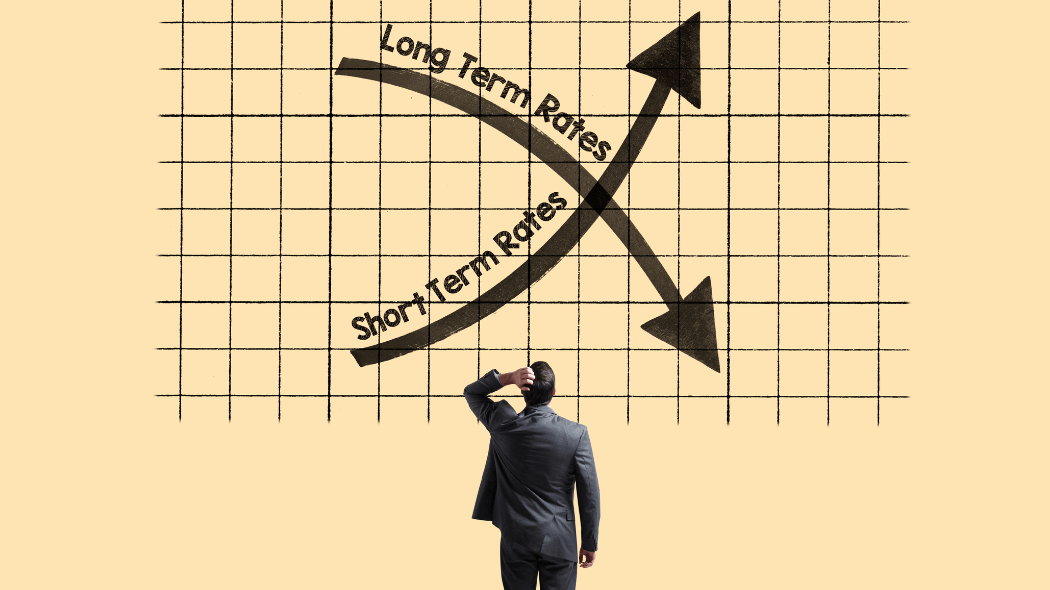
As of Nov’22, the yield curve for 3-month and 10-year US treasury has officially inverted. They are expecting to see the recession by Oct’23. In India, the yield curve seems to have flattened, which could go either way.

Usually, long-term bonds offer a superior yield than short-term bonds, making a yield curve an upward slope. But if not, the curve inverts and may indicate the possibility of an economic downgrading. 

An inverted yield curve was almost always followed by a recession. Though investors must only treat the yield curve as an indication as the economic scenario may flip. You never know.

Read on to find out more about the Inverted Yield Curve.


What is an Inverted Yield Curve?

  • A yield curve is a graphical representation of the yield earned from bonds of different maturity periods.
  • Each bond has a fixed coupon rate and a varying yield. The coupon rate gets declared against the face value (the initial NAV) of the bond. It remains the same even if the bond price changes.
  • Yield is collective earnings from the various bonds + the coupon rate + the principal amount. Bonds are also traded in the market similar to stocks. Their price goes up and down depending on the demand.
  • When the demand for a bond goes up -> The price goes up -> And the yield goes down.
  • As mentioned above, long-term bonds offer a higher yield than short-term bonds. The yield curve slopes upwards indicating a positive economy.
  • But, when the demand for long-term bonds increases, decreasing the yield, the curve inverts.
  • Consider, for instance, there are two bonds with similar ratings but different maturity periods. Bond-A is a short-term bond with 3 month maturity period. Bond-B is a long-term bond with 10 years maturity period.
  • If Bond-A offers a 6.78% yield and Bond-B offers a 6.01% yield, then the yield curve would invert. 


What Are The Different Types of Yield Curves?

1. Normal Yield Curve

As long-term bonds tend to be riskier, investors demand higher yields to compensate for the risk.

In such a case, long-term yields are higher than short-term yields.


2. Inverted Yield Curve

The yield curve becomes negative/inverted when the short-term yield surpasses the long-term yield. This also indicates increased demand for long-term bonds.


3. Flat Yield Curve

A flat yield curve indicates that both long and short-term bonds are performing the same. It could be the foreshadowing of a weak economy. A flat curve could be a transition phase between the normal and the inverted yield curve.


4. Steep Yield Curve

The yield curve goes steep when long-term bonds are offering far higher yields than short-term bonds. This indicates the growing economy.


Does an Inverted Yield Curve Always Means an Incoming Recession?

The Yield Curve was able to forecast recession many times in the past. In fact, in the past 50 years, an economic slowdown or a downgrade was seen with the inverted yield curve.

However, it is essential to understand that the yield curve is only an indicator. 

Let’s put it simply.

Economic ups and downs could happen due to many reasons. Inflation, sudden geographical tension, a wave of life-threatening viruses, or anything. While some changes are sudden, some can be analyzed by observing economical patterns.

Having said that, the yield curve will invert if the investors are expecting a possible downfall in the economy. With a fall in inflation, investors will analyze and predict a potential fall in the yield as well.

If the yield for the long-term bond keeps falling further, it could lead to a recession. 

However, an inverted yield curve isn’t the official parameter to predict a recession. It is merely an indicator.


What Should Investors Do When The Yield Curve Inverts?

Many investors closely follow the yield curve to align their investments accordingly. Prices of the bonds may fluctuate as the supply/demand dynamic changes.

Here are a few tips for investors-

1. Stay Calm

With the fear of recession around the corner, many investors start to panic. Some may end up selling without considering the possible risk/loss.

In a situation like this, you must stay calm.

The yield curve doesn’t stay inverted forever. The economy eventually catches up. Most importantly, whenever the yield curve inverts, the recession is not an immediate next step.

Investors get enough time to align their investments, which brings us to our next point. 

2. Align Your Investment

It is always advisable to have a diverse portfolio to minimize the risk. You can check where your portfolio stands with our complimentary portfolio analysis tool.

An inverted Yield Curve is one of the situations where outcomes could go either way. To prepare yourself, you may want to align and readjust your investments. 

You can explore other investment avenues that can balance out the risk and returns.

3. Periodic Re-Evaluation Of Asset Allocation

We would recommend re-evaluating your investment portfolio at regular intervals. It gives you an idea of where your profile stands in a changing economy.

There are many investment opportunities that can help you sustain your financial goals.


Conclusion

Many investors closely watch the yield curve to adjust their investments amid the possibility of a recession.

However, if the yield curve doesn’t stay inverted for a prolonged time, the economy may not lead to a recession.

Frequently changing yield curves may shed light on a weak economy, but not necessarily a recession. 

We would recommend following the above tips to stay calm and focus on your investment goals. Take actions that will suit your profile.

 You may also like to read- different types of mutual funds.

Categories
Blogs Personal Finance

What Is a Public Provident Fund Account?

A Public Provident Fund account (PPF) is a long-term tax-saving investment scheme that offers a fixed interest rate and tax-exempt returns. It’s a government-backed savings scheme with guaranteed returns.  

PPF account is as famous in Indian households as fixed deposit. Investors, regardless of their risk appetite, can keep aside a certain amount in a PPF account to gradually build wealth.

Some of the common reasons to have a PPF account are:

  • Child’s higher education
  • Buying a family home
  • Weddings or other milestones
  • Building retirement corpus

You can earn stable returns on your PPF account and take advantage of tax benefits under Section 80C. As of FY22, the interest rate on PPF is 7.1%. 

Before creating a PPF account, here are some things you need to know. 

What are the investment rules of the PPF account?

Any Indian resident can open a PPF account in a bank or a post office. You can only have one PPF account but you can transfer it from one bank to the other or to the post office if needed. 

You can also open a PPF account for your children and manage it until they are old enough. 

Once you open an account, you must invest between INR. 500 to INR. 1,50,000 in one financial year. Any amount beyond INR. 1,50,000 won’t be considered for tax savings under Sec 80C. 

Your investment will be locked for 15 full financial years and you will continue to earn compound interest on it. However, you can withdraw a partial amount in intervals of 5 years.

Let’s elaborate some more.

Top 4 Features of Public Provident Fund Account

  1. Investment Amount

You need to invest anywhere between INR. 500 to INR. 1,50,000 in a financial year on a monthly, quarterly, or annual basis as you get up to 12 installments per year. There’s a small penalty if you miss an installment in a financial year. 

  1. Investment Horizon

PPF account has a tenure/lock-in period of 15 full financial years. This means- if you start your account on, let’s say, 1st Oct 2022, your 1st financial year will start from 1st April 2023. 

Yes, you will earn returns on the investment from 1st Oct 2022 to 1st April 2023. But the financial year will begin on 1st April 2023.

You can withdraw a partial amount (50% of the total available balance) only after the completion of 5 years. Until then, the investment will be locked. Though you can claim a loan against your PPF account.

  1. Loan Against PPF Account

Since your amount is locked-in, you can apply for a loan against your PPF account.

There are two rules to claiming the loan:

  • You can only request a loan from the beginning of the 3rd financial year to the end of the 6th financial year. 
  • You will only be eligible for 25% of the amount from your PPF account calculated immediately preceding the year in which you are applying for a loan. 

The interest on this loan will be 1% + the PPF interest rate. If the PPF interest rate is 7.1%, the loan interest rate will be 8.1%.

  1. Tax Benefits on Public Provident Fund Account

PPF investments up to INR. 1,50,000 are eligible for tax benefits under section 80C.

However, if you have any other investment under section 80C, then you may not be able to claim the tax benefit on PPF. 

If PPF is your only investment under Section 80C, then you can take advantage of Exempt-Exempt-Exempt (EEE) i.e. The amount invested in PPF, the interest earned, and the final corpus withdrawn at the time of maturity are all exempt from tax.

What Happens If You Choose To Extend the PPF Account After 15 Years?

After the full 15 financial years, you can either withdraw the full amount or extend the account in blocks of 5 years,

In that case, you will be able to withdraw the balance that was available before the extension was locked. So if you had INR. 30,00,000 after 15 years and you extend the account, you can only withdraw 30L. Any further investment will be locked. Also, you can only make one withdrawal in each financial year.  

Can You Terminate The PPF Account Prematurely?

In case you need emergency funds, there are 2 cases in which you can terminate the account.

  1. For the medical emergency of a life-threatening disease of you or your parents/spouse/children.

  2. For higher education of children.

How to Maximize The returns On Public Provident Fund Account?

There are 2 simple tips that can maximize your PPF account returns. 

  1. Invest at the beginning of the year

If you invest a large amount once a year in your PPF account, we recommend doing it at the beginning of the year (Preferably before the 5th of April). 

Most people invest a large amount at the end of the financial year to get tax benefits. However, the interest on the amount is calculated throughout the year. You can take advantage of maximum interest if you invest when the financial year begins.

  1. Before the 5th of each month

If you are planning to schedule monthly investments, prefer to do it before the 5th of each month. 

The balance considered for calculating interest on the PPF account is calculated on – the balance in your PPF account on the 5th day of the month and the last day of the month – whichever is lower.

For example, if your balance is INR. 2,00,000 and you invest INR. 50,000 on the 6th of a month, you will earn interest only on INR. 2,00,000 and not on INR. 2,50,000. But if you invest that INR. 50,000 before the 5th of that month, then your interest will be calculated on INR. 2,50,000.

Conclusion

Having a PPF account is a disciplined way of building wealth for the future. You can open an account online and keep transferring money into it. 

It’s a secure investment with stable returns and tax benefits. Continue keeping some money aside for the future and forget about it until maturity. By the time of maturity, you will have a large corpus ready.

Don’t forget to invest money in your PPF account either before the 5th of April each year or before the 5th of each month for monthly installments. That way, you will maximize the returns on your investment. 


To know more about long-term investments, give VNN Wealth experts a call or write to us. Get all your queries answered with a thorough portfolio analysis. 

Categories
Blogs Mutual Funds

What Are Flexi Cap Mutual Funds?

Flexi cap mutual funds are a new category of equity mutual funds with flexible asset allocation across the market capitalization. These mutual funds give investors the freedom to invest in small, mid, and large-cap stocks without any restrictions.

How is it different from Multi-cap funds? Multi-cap funds have to compulsorily invest at least 25% of assets each in small, mid, and large-cap stocks. Flexi-cap funds have no such restrictions. Fund managers can dynamically allocate assets to growth-positive companies to maximize returns.

Sounds interesting? Let’s find out more about Flexi Cap mutual funds.

SEBI launched the Flexi-cap scheme in 2020 to offer investment flexibility and dynamic asset allocation.

Fund managers have to invest at least 65% of total assets into equities across market capitalization. They can decide the allocation based on their analysis and expertise to lower the risk and boost profits.

1. Freedom of Investment

Fund managers can invest the principal amount across a wide spectrum of markets. There is no limitation or rules on asset allocation. Flexi-cap funds are required to invest at least 65% into equities. But they have the freedom to distribute that 65% (or more) into any market cap. 

2. Diverse Portfolio

Flexi-cap schemes are a blend of small, mid, and large-cap companies. They can create a diverse portfolio by allocating assets to different sizes and types of companies. 

3. Balanced Risk

Flexi-cap funds deliver favorable returns with balanced risk. While you can explore small-cap funds for higher returns, large-cap funds can safeguard your investment. Mid-caps are moderately risky with decent returns. They collectively create a perfect balance between risk and returns.

4. Shift Investment

Fund Managers can anytime shift assets between small, mid, or large-cap based on market volatility. They can tilt the funds completely towards a specific market capitalization segment or keep it diverse. 

5. Surpassing Inflation

Flexi-cap funds have the potential to defeat inflation in the long run. As you have a dynamic mixture of various market capitalizations, inflation won’t affect your returns as much.

1. Investment Objectives

You must check if their investment goals align with Flexi-cap funds. Even though these funds have various benefits, that doesn’t mean you should invest blindly. Examine the fund’s features, fund manager’s performance, risk, and returns before investing in any mutual funds.

2. Risk

Flexi-cap funds balance the risk with diverse investments but are not risk-free. You may encounter high risk if the fund has allocated the majority of your assets to small-cap companies. Usually, fund houses have an in-house model to periodically balance Flexi-cap funds to minimize risk and maximize returns. Make sure your risk profile has a scope to welcome Flexi-cap funds.

3. Fund Houses and Managers

It is very crucial to know the in-house policies and strategies of fund houses in the case of Flexi-cap funds. The returns you will earn depend on how well fund managers distribute your assets. 

4. Expense Ratio and Exit Load

Fund houses charge a small amount of fee to handle your funds in the form of an expense ratio. Compare the expense ratio of various Flexi-cap funds with respect to returns before investing in them. Exit load is a fee charged at the time of fund redemption. If you hold the investment for a certain period of time, you might not need to pay an exit load. Check the exit load policy of fund houses beforehand.

Taxation of Flexi-Cap funds is the same as any other equity mutual fund. You will have to pay a 20% tax on Short Term Capital Gains (Investments redeemed before 12 months). 

Long Term Capital Gains (Investment redeemed after 12 months) above INR. 1.25 lakhs are taxed at 12.5%.

Flexi-cap funds are suitable for investors who can take moderate to high risks. It diversifies your portfolio and balances the risk. You can invest in Flexi-cap funds if you can keep an investment horizon of at least 5 years. 

SEBI launched Flexi-cap as an alternative to multi-cap funds. The aim was to offer flexibility to try different investment scenarios without any restrictions.

With Flexi-cap funds, fund managers can explore market capitalization and periodically update asset allocation. There is a decent chance of earning superior risk-adjusted returns if you can take some risk.

You can always take an expert’s opinion before investing in Flexi-cap funds. VNN Wealth experts can help you shortlist funds and create a strong portfolio, so you won’t have to worry. 

Call us or reach out via email. Start building your wealth today!

Also Read-

Large Cap Mutual Funds?

Mid Cap Mutual Funds?

Small Cap Mutual Funds?

Categories
Blogs Investing Basics

What Are Balanced Advantage Funds?

Balanced Advantage Funds (BAF) follow a hybrid/dynamic asset allocation model between equity and debt with no threshold on asset allocation. Fund managers shift your portfolio between equity and debt based on market conditions. This dynamic asset allocation method offers both growth and stability, especially during market ups and downs.

BAFs are one of the best mutual fund schemes to stabilize returns during market volatility. It’s safe to say that BAFs can balance your investment portfolio and here’s everything you need to know about these schemes:

Depending on market performance, fund managers allocate 65-80% of total assets into equities and 35-20% into debt. The allocation gets periodically rebalanced to minimize the risk and maximize the returns. 

Fund houses usually have an in-house allocation model which could be any one of the below. 

Counter-Cyclic Allocation Model

This model reduces investments in equity and increases debt allocation when the market is high. When the market is low, the investments tilt more towards equities.

Pro-Cyclic Allocation Model

This model follows the market trend and invests more in equity when the market is growing. Fund managers gradually reduce equity holdings when the market is falling.

Some funds use a combination of both methods depending on market conditions.

1. Stable Returns

As BAFs follow a dynamic asset allocation model, the fund has debt allocation to fight equity market volatility. The portfolio will not crumble dramatically even when the equity market is at its lowest. The debt allocation within the fund balances your portfolio as you explore equity opportunities through BAF thereby generating stable returns. 

2. Low Risk

As BAFs are not completely allocated to equities, the risk factor is relatively lower. The exposure to equity and debt is healthy enough to tolerate market volatility and also generates decent returns. 

3. Dynamic Asset Allocation 

Fund managers use market conditions to your benefit as they dynamically allocate assets between debt and equity. Whenever equity instruments deliver superior returns, fund managers may shift some of them towards debt instruments to balance the risk.  

4. Tax Benefits

When calculating tax, BAFs fall under equity funds in India, allowing investors to gain tax benefits. The tax regime is similar to equity funds. Short Term Capital Gains (investments held for <12 months) will be taxed at 20%. Whereas Long Term Capital Gains above 1.25 lakhs (investment held for > 12 months ) will be taxed at 12.5%.  

1. Risk Factor

Although BAFs have lower risk, they are not completely risk-free. If the equity allocation is higher, the risk will also be higher due to equity market volatility.

2. Gain/Returns

The gain in BAFs won’t necessarily be as good as pure equity funds when the market boosts. However, the returns on BAF would be better than fixed-income funds. To gain higher returns, it’s best to keep your investment horizon for at least 3 years or more.

3. Investment Horizon

Again, you should only invest in BAFs if you can keep aside a horizon of 3 years or more. BAF may not be an ideal option for investors looking for short-term investments.

As mentioned above, BAFs are taxed similarly to equity funds. If you redeem your investment before 12 months, it will fall under Short Term Capital Gain (STCG) tax which is flat 15% on capital gains.

And if you redeem your invested money after 12 months, it will fall under Long Term Capital Gain (LTCG) which is 10% on capital gain above INR 1 Lakh. It is recommended to hold these funds for a longer period of time to take advantage of tax benefits and most likely, higher returns. 

BAF is suitable for investors who are seeking equity-like returns but with slightly lesser risk. BAF funds are less riskier than equity funds. Consider investing in BAF if you are comfortable with moderately aggressive investment or if your risk profile is balanced. BAF funds tend to deliver superior returns over a long period of time. We would recommend you keep a wider investment horizon, possibly 3-5+ years. If any one of the above factors matches your goals, you should definitely invest in BAFs. Call VNN Wealth Experts for more guidance.

Balanced Advantage Funds, aka Dynamic Asset Allocation Funds, are perfect to be a part of your long-term financial goals. You get the best of both equity and debt funds with low to moderate risk. Even though these funds are dynamic, fund managers will divide asset allocation as 65-80% into equity instruments and 35-20% into debt instruments. 80-20 allocation is more aggressive and risk-prone. 65-35 allocation can deliver decent returns with lower risk. 

As you know, the equity market is highly volatile. Even if you have a high-risk appetite, you may want to allocate a certain percentage to this category to bring stability to the portfolio during volatile times. To get equity-like returns with balanced risk via debt instruments, consider investing in BAF. The SIP method may further balance the risk instead of lump-sum. 

Read more about the advantages of SIP.

For any further guidance on investment planning and portfolio building, reach out to us anytime.  

loader